
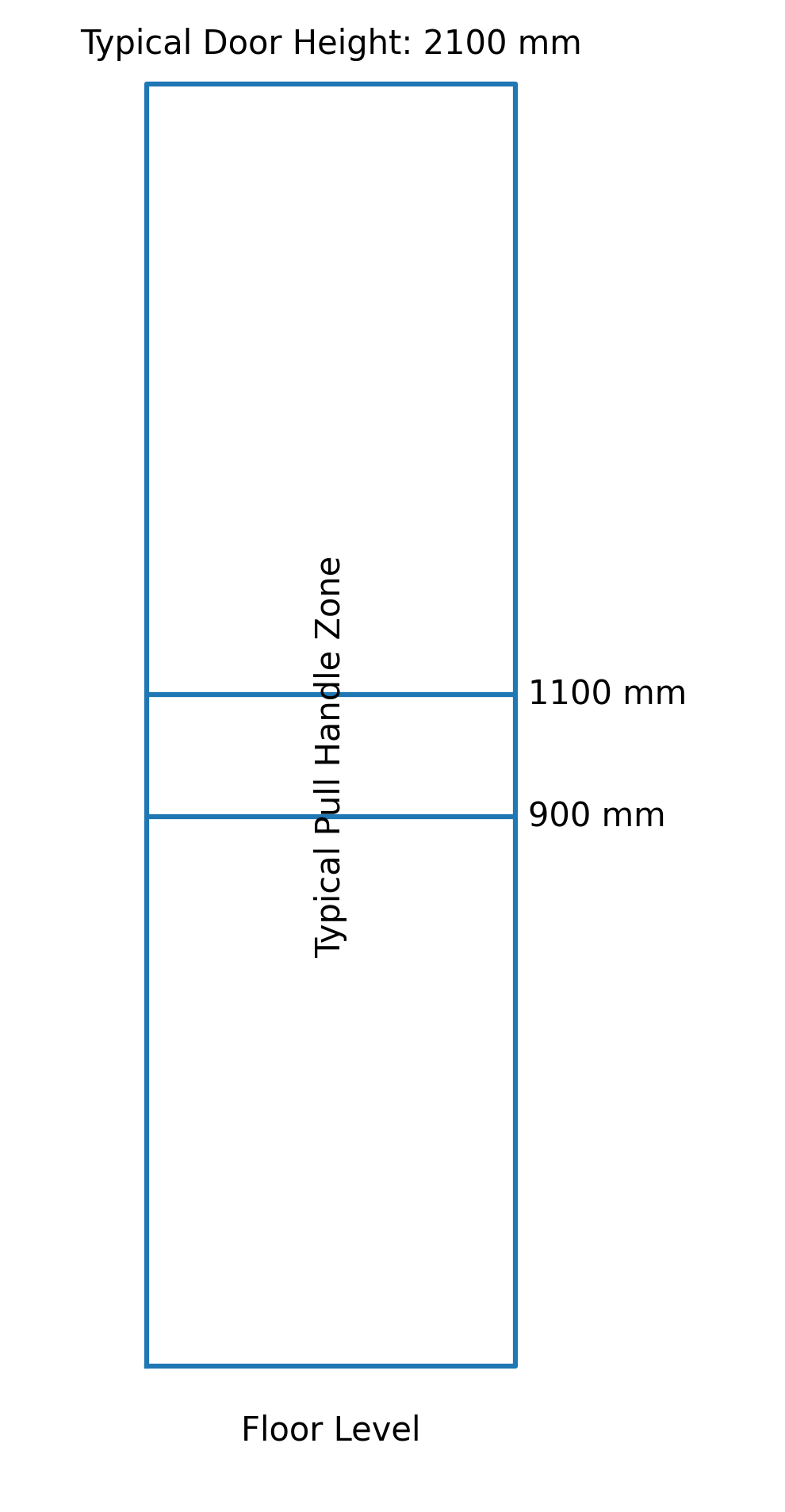
Door handle heights.
The standard centreline. The Approved Document M reference. The Ash benchmark used on every commercial install — read off a single sheet.
The 1000mm rule, and where it comes from.
UK accessibility guidance — Approved Document M of the Building Regulations and BS 8300-2:2018 — sets a reach zone of 900mm to 1050mm above finished floor level (AFFL) for door-operating hardware. The midpoint of that band, 1000mm AFFL, is the centreline most UK specifiers, installers and architectural ironmongers default to.
Ash uses 1000mm as the standard datum on every commercial pull-handle, lever and push-plate installation, adjusted only where the door schedule calls out a defined exception — child-reach in schools, wheelchair-seated reach in healthcare, or a sliding-door rail offset. Everything else on this page references that single line.
Below is the reference table we hand to contractors, alongside the governing standard for each element. Print it. Pin it to the door schedule. Or send a project drawing and we'll mark it up for you.
Handle heights, by element.
Recommended installation heights for the eight most commonly specified door-operating elements in UK commercial and public buildings. All heights from finished floor level (AFFL).
| Element | Height (mm AFFL) | Governing Standard | Notes |
|---|---|---|---|
| Pull handle | 900 – 1050 centre @ 1000 |
BS 8300-2:2018 · ADM | Centreline of the grip. On full-height pulls the practical grip area still falls in this band. |
| Lever handle | 900 – 1050 spindle @ 1000 |
BS 8300-2:2018 · ADM | Aligns with mortice-lock case. Levers preferred over knobs (closed-fist operable). |
| Push plate | 775 – 1225 centre @ 1000 |
BS 8300-2:2018 | 300–450mm plate height typical. Centre matches handle datum for visual consistency. |
| Kick plate | 0 – 400 | BS 8300-2:2018 | Bottom flush with door foot. Protects against trolleys, wheelchairs, footwear damage. |
| Panic bar (push pad) | 900 – 1100 push pad centre |
BS EN 1125 · ADB | Centre of the operating push pad. Mandatory on public assembly final exits. |
| Letterbox | 760 – 1450 | BS 2911:2007 | Aperture centre. Commercial mail-receiving doors often specified at 1000–1200mm. |
| Door viewer | 1400 – 1500 | BS 8300-2:2018 | Second lower viewer at 1050mm recommended for wheelchair-user dwellings. |
| Thumbturn lock | 900 – 1100 | BS 8300-2:2018 · ADM | Operable with a closed fist. Coordinate with lever centreline. |
Standard pull vs full-height pull.
Standard pull handles place the entire grip within the 900–1050mm band. Full-height (long-bar) pulls extend vertically across the door — the practical grip area must still fall in the reach zone.
Standard pull handle — 1000mm centreline
Typical for: Internal commercial doors, office entry, retail back-of-house, healthcare ward doors. Handle length usually 300–600mm with the centre at 1000mm AFFL.
Full-height / long-bar pull — grip zone reference
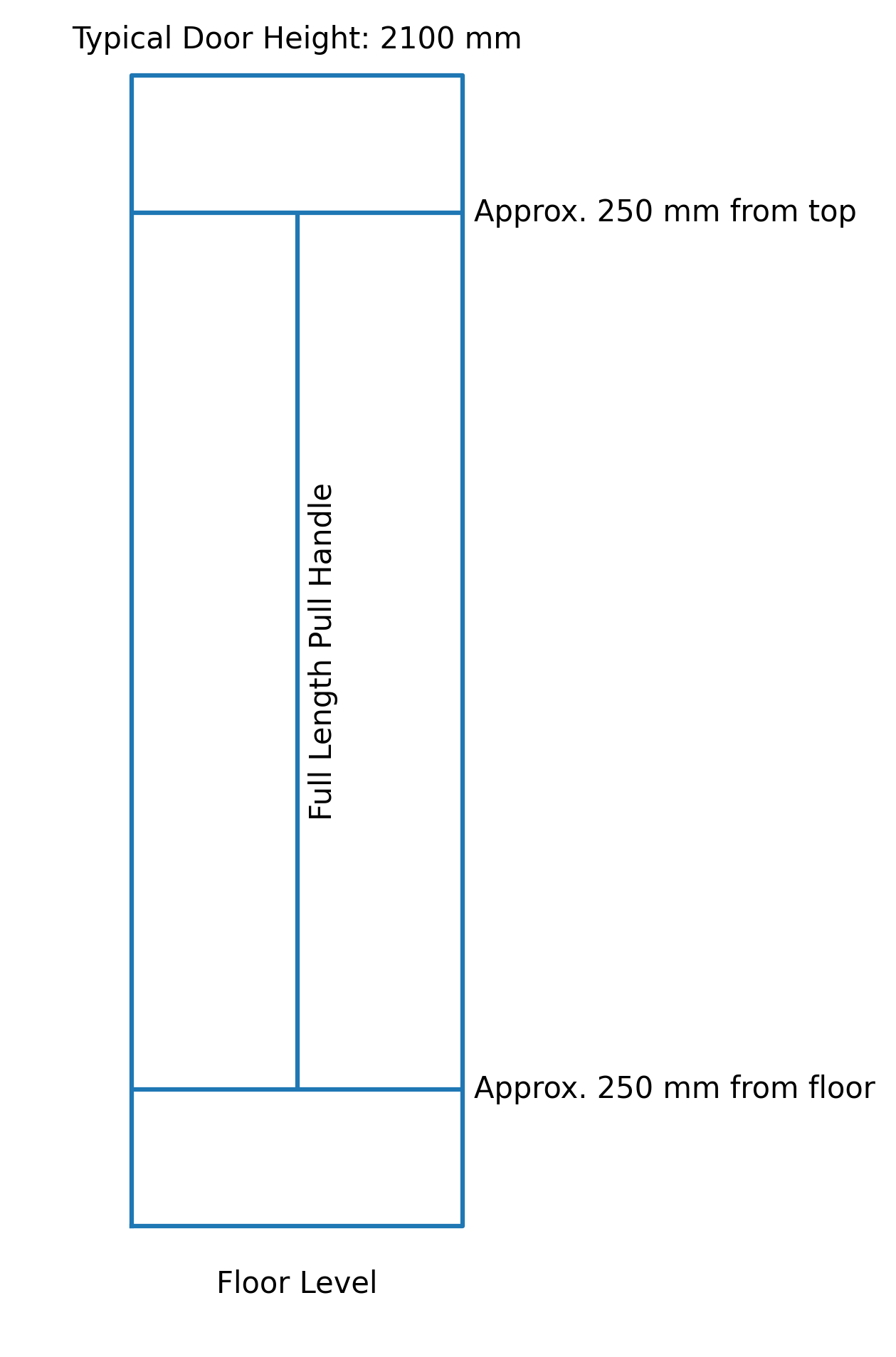
Typical for: Office entrances, apartment blocks, retail front-of-house, aluminium and glass doors. Handle 1200–1800mm or full-height; the natural grip area aligns with the accessible reach zone.
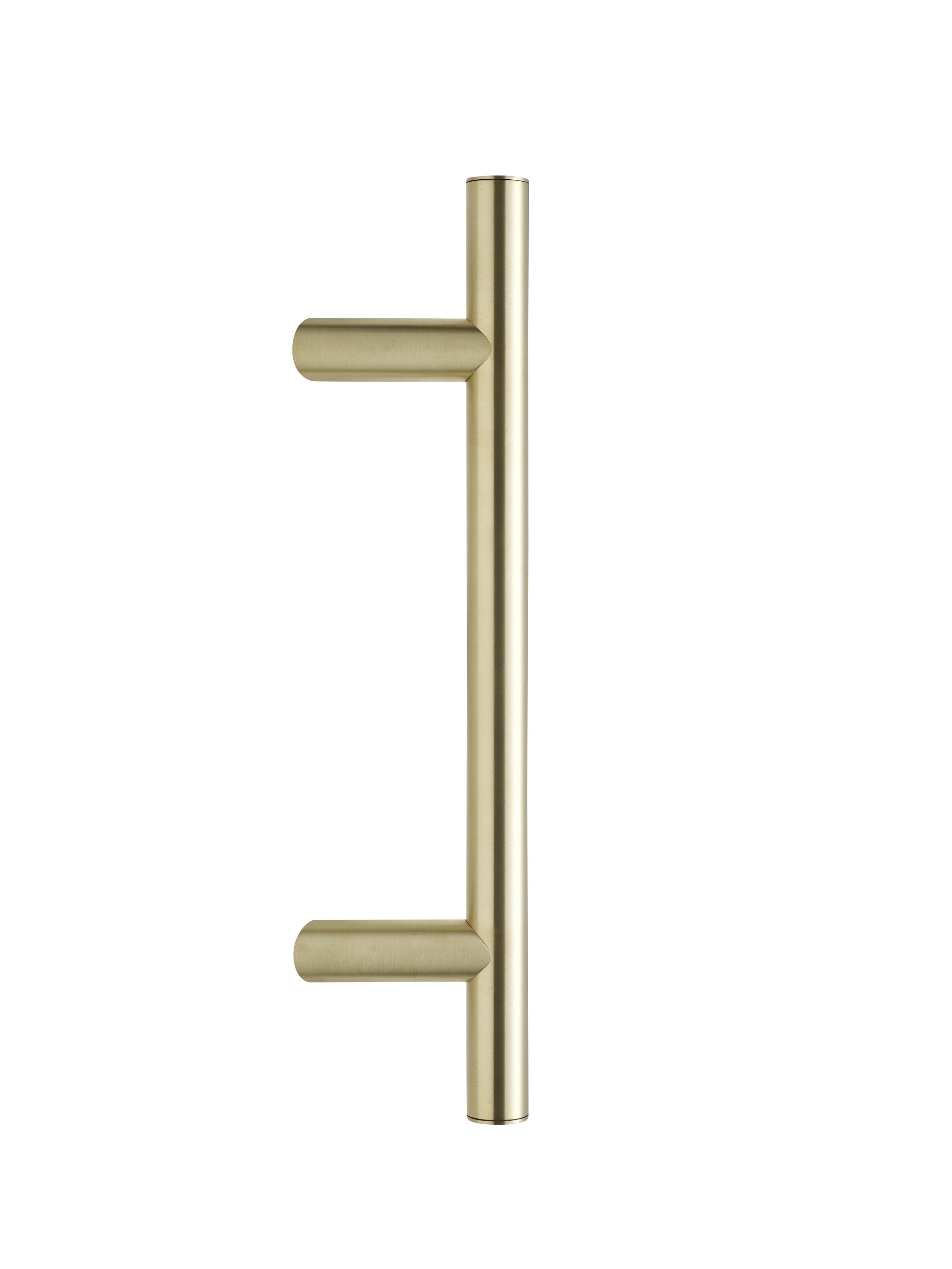
Pull handles designed to install at 1000mm AFFL — first time.
Every Ash commercial pull handle is engineered with the UK reach zone in mind: grip diameter, projection from face, clearance and visual contrast all tuned for Approved Document M and BS 8300 compliance.
- 32mm grip diameter — closed-fist operable
- 45mm+ clearance from door face
- Drilled centres coordinated to 1000mm AFFL on standard fixings
- Contrast finishes available — satin brass, satin stainless, bronze patina
Manufactured in Nottingham. Engineered for UK compliance.
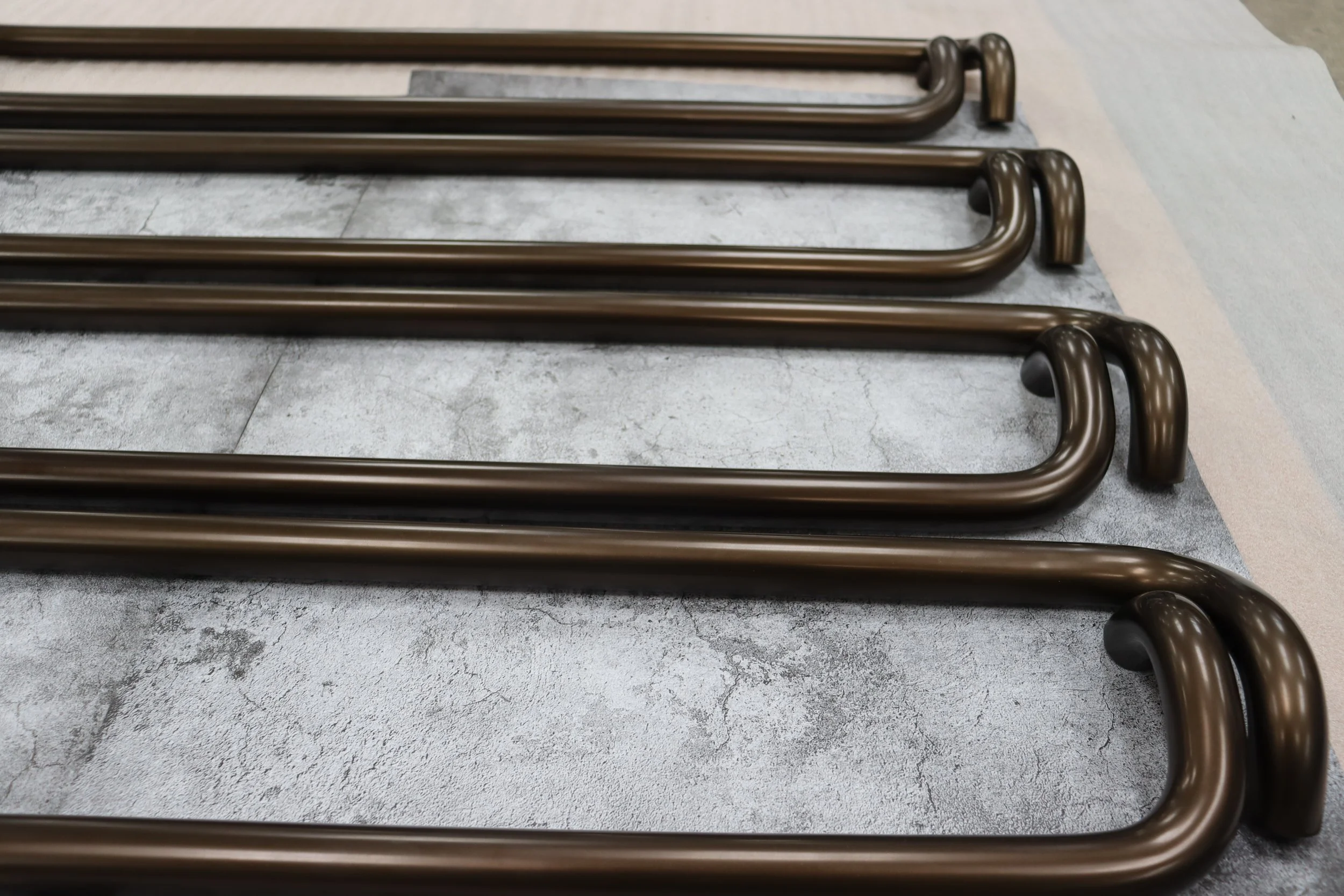
Every handle on the reference table is made in our Colwick workshop — not specified to a generic European catalogue, then back-checked. UK standards are baked into the product from the bar stock up.
That means short lead times, the option to pre-drill to your exact 1000mm centreline on full-height pulls, and a real engineer at the other end of the phone when a door schedule throws a curveball.
Questions from the door schedule.
The six questions we field most often from architects, contractors and main-contractor QSes when finalising a hardware specification.
Q.01What is the standard height for a pull door handle in the UK?
Q.02Do pull door handles need to be DDA compliant?
Q.03How high should a push plate be installed?
Q.04What's the correct height for a lever handle on an internal door?
Q.05Where do you measure handle height from?
Q.06Can handle heights be adjusted for accessibility?
Continue the spec.
The pages most often opened alongside this one.
Send us your door schedule. We'll mark up the heights.
Drop the project drawings, door schedule or just the building type and floor plan. We'll send back handle-height annotations referenced to Approved Document M and BS 8300, plus a matching product spec — usually within two working days.