
The Real Cost of Cheap Door Hardware
New year, new budgets, new projects. If you're specifying hardware for a fit-out in 2026, chances are someone's already asked: "Do we really need to spend that much on door handles?"
It's a fair question. On paper, the difference between a £40 handle and a £150 handle seems hard to justify. They both open doors. They both look roughly similar in a photograph. And when you're trying to keep a fit-out on budget, those savings add up quickly.
But here's what we've learned from three decades of making door hardware: the purchase price is the smallest part of the equation.
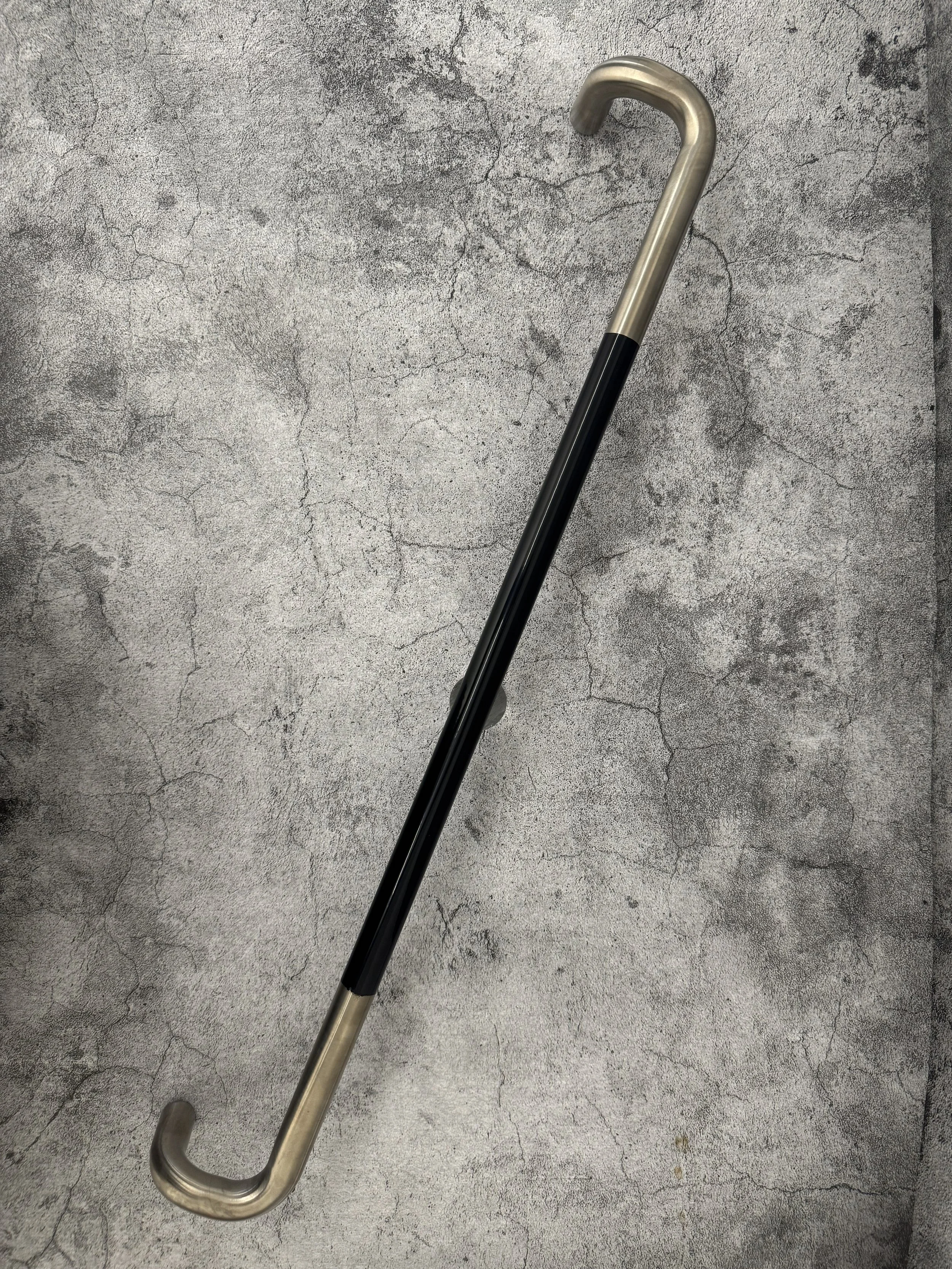
The replacement cycle problem
Cheap hardware doesn't usually fail dramatically. There's no single moment where it breaks and you think "right, that was a mistake." Instead, it degrades slowly.
The finish starts to dull after six months. The fixing loosens slightly, so there's a bit of wobble when you pull. The plating wears through at the grip point, showing the base metal underneath. None of it is catastrophic. All of it is noticeable.
And then, somewhere around year two or three, someone senior walks through the entrance, puts their hand on the door, and says: "This feels cheap. When did we last look at this?"
That's when the replacement conversation starts. Not because the handle has stopped working, but because it's stopped representing the building properly.
The handles we make are designed for a different lifecycle entirely. We're talking ten, fifteen, twenty years of daily use in commercial environments. The maths changes completely when you spread the cost over that kind of timeframe.
Maintenance calls add up
Every loose fixing is a maintenance call. Every tarnished finish is a complaint from a tenant or building manager. Every wobbling handle is a note on someone's to-do list.
These aren't expensive individually. A facilities team can tighten a screw in five minutes. But multiply that across dozens of handles, across multiple buildings, across several years — and you've got a recurring cost that never shows up in the original specification.
Worse, it's a cost that falls on the people who didn't make the purchasing decision. The facilities manager dealing with loose handles three years later wasn't in the room when someone decided to save a few hundred quid on hardware. They're just dealing with the consequences.
Quality hardware needs less attention. Better fixings stay tight. Better finishes stay consistent. Better materials resist the daily wear that makes cheap handles look tired. The maintenance burden drops significantly — and that's a saving that compounds year after year.
First impressions happen at the door
This one's harder to quantify, but it matters.
The entrance is where people form their first physical impression of a building. Before they've spoken to reception, before they've seen the fit-out, before they've met anyone — they've touched your door handle.
A handle that feels substantial, that operates smoothly, that looks like someone chose it deliberately? That sets a tone. It says: we pay attention to details. We invest in quality. We care about the experience.
A handle that wobbles, that's visibly worn, that feels like an afterthought? That sets a different tone entirely.
For retail, hospitality, premium office space — anywhere that's trying to create an impression — the door hardware is doing more work than most people realise. It's the handshake before the conversation starts.
The specification trap
Here's how the cheap hardware problem usually happens.
An architect or designer specifies decent hardware. It's appropriate for the project, it meets the aesthetic requirements, it'll last. Then the specification goes to procurement, and someone finds an "equivalent" product at 60% of the price.
On the spec sheet, they look similar. Same dimensions. Same basic description. Maybe even a similar-sounding finish name.
But the details matter. The grade of stainless steel matters. The quality of the plating matters. The precision of the fixings matters. The thickness of the tube wall matters. None of that shows up in a line-item comparison — but all of it affects how the handle performs over time.
We see this regularly. Clients come to us for replacements, and when we look at what was originally fitted, it's clear what happened. The specification was value-engineered, and now they're paying twice.
What quality actually costs
Let's be direct: our handles cost more than the budget alternatives. That's not going to change, because we can't make them cheaper without compromising on materials, manufacturing, or finish quality.
What we can do is explain where the money goes.
It goes into 316 marine grade stainless steel that won't corrode in demanding environments. It goes into solid brass that develops a genuine patina rather than flaking plating. It goes into precision engineering that keeps fixings tight for years. It goes into finishes that are applied properly, not just sprayed on to look good in the showroom.
And it goes into manufacturing in Nottingham, where we've been making this stuff since 1990. Every handle comes from the same workshop, made by the same team, to the same standards — whether it's from our standard range or a fully bespoke design.
The real question
The question isn't really "do we need to spend this much on door handles?"
The better question is: "What's this hardware going to cost us over the next ten years?"
When you factor in replacements, maintenance, and the impression it creates every single day — quality hardware isn't the expensive option.
It's the only option that makes sense.