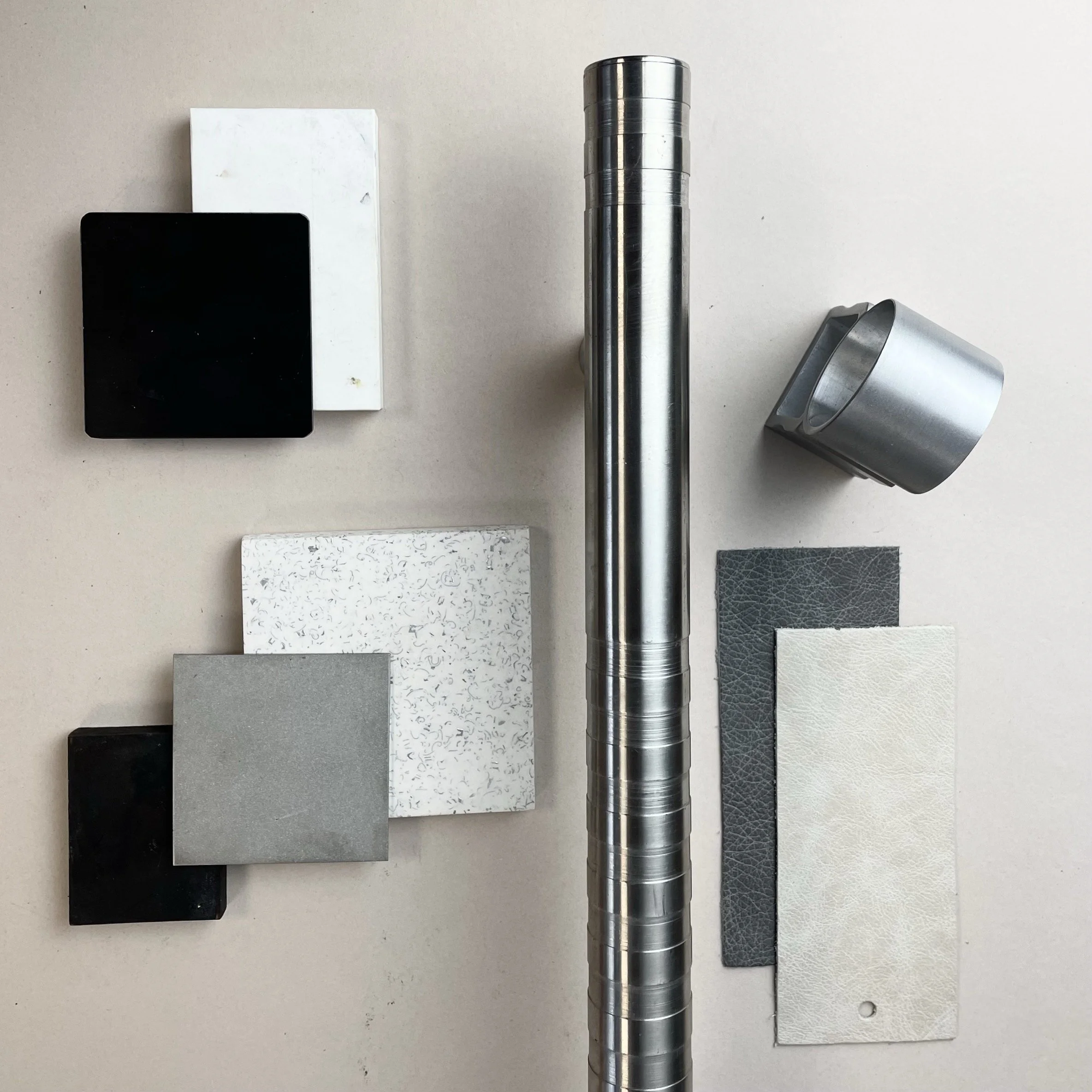
When the Brief Changes Mid-Project: A Bespoke Case Study
The original brief was straightforward. Thirty-one pairs of stainless steel T-bar handles for a commercial fit-out. Standard finish. Standard dimensions. Four-week delivery.
Then the architect visited the building.
The interior scheme had evolved. The stone cladding was warmer than the sample. The lighting had been redesigned with a lower colour temperature. Suddenly, brushed stainless steel looked clinical against everything around it.
The architect called us. “Can we switch to brushed brass? All thirty-one pairs. Same timeline.” Here’s what happened next.
Day one: the honest assessment
Brass requires different material procurement, different machining parameters, and a different finishing process. The four-week timeline wasn’t realistic for the full order.
We gave the architect the real picture: fifteen pairs in four weeks, remaining sixteen pairs two weeks later. The fit-out was phased anyway, so splitting delivery matched the installation sequence. The architect agreed. We started procurement that afternoon.
Week one: design verification
We produced a single sample in brushed brass within three days. The architect visited the factory to approve it against the actual stone sample from site. The finish was right. The weight was different — brass is denser, which actually improved the feel. Approved on the spot.
Weeks two and three: manufacturing
Fifteen pairs, each checked against the approved reference sample. The critical detail was the brushing direction — on T-bar handles, brush lines must run parallel to the bar’s length. Any deviation is visible in brass. Our finishing team hand-checked every handle.
Week four: delivery
First batch delivered on the original deadline. The architect sent us a photo of the handles fitted against the limestone cladding. They looked like they’d always been part of the design. Second batch followed two weeks later. Identical to the first.
What made it work
Three things. The architect called us immediately — the same day. We were honest about what was achievable and proposed a phased approach. And we manufacture in Nottingham — material procurement, design adjustment, sample approval, and manufacturing all happened within walking distance of each other.
Changes happen. The question is whether your manufacturer can absorb them without the project suffering.